
Lontek Foldable Treadmill For Home Review: At a Glance
| Functionality: |  (3.5 / 5) (3.5 / 5) |
| Ease of Use: |  (4.0 / 5) (4.0 / 5) |
| Value for Money: | (3.5 / 5) |
If you are looking for a treadmill that is clearly designed for home use rather than a dedicated gym space, the Lontek Foldable Treadmill for Home is the sort of machine that will catch your eye quickly. It is built around the features that matter most to many home buyers: folding storage, a relatively compact footprint, straightforward controls, and enough speed and incline to offer more than a simple walking workout. Recent LONTEK listings in the UK market present this style of treadmill as a home-friendly foldable machine with a brushless or quiet motor, a folding frame, manual incline, and speeds ranging from around 12 km/h to 14 km/h depending on the exact version.
That positioning makes sense. A lot of people shopping for a treadmill are not trying to recreate a commercial gym at home. They want a machine they can use for regular walking, light jogging, and moderate running sessions without handing over a huge amount of floor space or budget. On paper, the Lontek looks designed for exactly that market. It is not pretending to be a premium connected treadmill with a large touchscreen ecosystem or a heavy-duty runner’s platform. Instead, it aims to offer practical home functionality and just enough training flexibility to appeal to a broad range of everyday users.
That can be a good thing. In the home treadmill market, simpler machines often make more sense than feature-heavy alternatives, especially if your priorities are storage, convenience, and manageable cost rather than serious marathon-style training. The Lontek Foldable Treadmill for Home appears to sit in that useful middle ground between the most stripped-back walking pads and the larger, more expensive running treadmills that demand a permanent place in the room.
What this treadmill is trying to offer
The strongest point of the Lontek is that it seems built around realistic home use. The recent listings I found consistently highlight foldability, a compact design, a quiet motor, and features such as an LCD or multi-screen display, pulse sensors, and tablet or phone support. That gives the treadmill a very recognisable role: it is aimed at people who want a practical home cardio machine rather than an advanced performance treadmill.
That matters because many buyers end up choosing between two extremes. At one end, there are very basic under-desk walking pads that are easy to store but not especially satisfying if you want to jog or run. At the other end, there are much larger treadmills with bigger motors, larger decks, and more advanced training features, but they cost a lot more and can dominate the space around them. The Lontek seems intended to bridge that gap by offering a more complete treadmill experience without moving fully into premium territory.
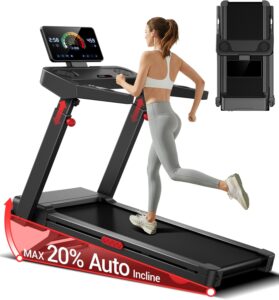
Another thing worth noting is that several current LONTEK-style listings lean heavily on incline as a selling point. Some mention a 14% manual incline, while others market a steeper claimed incline on different variants. That tells you that the treadmill is being sold not just as a flat-deck walking machine, but as something intended to increase workout intensity without relying entirely on speed. For home users, that can be very useful. Incline is one of the easiest ways to make a treadmill more versatile.
Performance and training range
In terms of performance, this is not a treadmill you would buy if your main goal is high-end running. The speed ceiling on the current foldable home-use LONTEK listings sits around 12 km/h on one version and 14 km/h on another, which is enough for walking, brisk walking, light jogging, and moderate running for a lot of users, but it is clearly below the level of more serious training treadmills.
That is not necessarily a criticism. It depends entirely on who the machine is for. For many home users, especially beginners or those mainly interested in fat loss, daily cardio, or general fitness, 12–14 km/h is more than enough. Plenty of people will never need more than that. If your workouts are mainly walking sessions, jogging intervals, or steady efforts at a moderate pace, the Lontek should feel capable enough on paper.
Where it becomes less convincing is if you are a committed runner who wants stronger sustained running performance, a more generous belt area, and the confidence of a larger, heavier treadmill frame. A machine in this category is more about practicality than outright athletic performance. The double-deck design and claimed load capacities on some listings are encouraging, but they do not fully change the fact that this is a compact home-use machine rather than a runner-focused training platform.
Still, the incline does help the training range. The 14% manual incline version in particular adds a useful layer of variety, allowing the treadmill to feel more challenging without requiring very high speeds. That is good news for walkers, people focused on calorie burn, and those who prefer lower-speed workouts with a bit more resistance.
Design, size and folding practicality
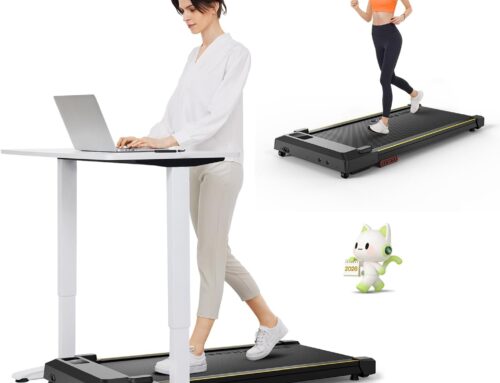
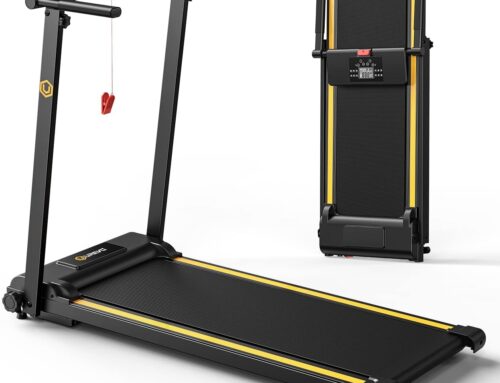
This is the area where the Lontek makes the most sense. The foldable design is central to the whole product. The current listings repeatedly present it as a treadmill that can fit into home and office settings, and that tells you exactly what kind of buyer it is chasing. Space-saving practicality is clearly one of the main reasons to consider it.
That is important because many people abandon the idea of buying a treadmill once they realise how much room a larger machine needs. A foldable home treadmill gives you a more realistic chance of living with it day to day. You can use it in a spare room, study, bedroom corner, or family room and still avoid giving over the entire space permanently to exercise equipment.
The product dimensions on current LONTEK listings also point toward a compact build. One listing gives dimensions of roughly 120 cm by 62.5 cm by 14 cm in the stored form, while another shows a larger but still home-oriented footprint. That suggests the exact version matters, but the overall concept is the same: this is a treadmill designed to fit around the home, not dominate it.
Of course, compactness brings trade-offs. The smaller and more practical a treadmill becomes, the more likely it is that the running deck will feel limited compared with a more substantial machine. For walkers and moderate joggers, that may be perfectly fine. For taller users or stronger runners, it may feel more restrictive.
Features and ease of use
The feature set looks solid for the category. Across the current listings, LONTEK includes things like a real-time display for speed, time, distance, and calories, pulse sensors on at least some versions, a tablet or phone holder, cup holder, and simple controls designed for quick adjustment during a session.
This kind of feature mix is usually exactly what a home user needs. It is not flashy, but it is practical. A simple display is easier to live with than a complicated console if you just want to get on and train. The tablet holder is a useful touch because many buyers now prefer to provide their own entertainment rather than rely on built-in media systems. A clear display and direct controls also make the treadmill more approachable for beginners.
Another positive is the emphasis on quiet operation. Several listings refer to quiet or brushless motors, which is helpful in a home setting where noise can be a real issue. A treadmill does not need to be silent to be usable, but the less intrusive it feels, the easier it is to use regularly in a shared household.
The absence of an advanced connected ecosystem may actually be a plus for some buyers. Not everybody wants subscriptions, apps, or a large touchscreen. There is still a place in the market for a treadmill that simply works, folds away, and gives you enough basic workout data to stay on track.
Who this treadmill suits best
The Lontek Foldable Treadmill for Home makes the most sense for buyers who want a practical cardio machine for regular home use. It should appeal most to walkers, beginners, casual joggers, and users who want a treadmill that can be folded away after use. It also looks like a decent fit for people who do not want to commit to the cost or footprint of a larger treadmill but still want something more capable than a very basic walking pad.
It also suits buyers who like the idea of incline training without moving into a much more expensive category. The incline feature gives the machine a broader role than many flat-deck compact treadmills, and that helps it stand out in a crowded field of home-use options.
Where it is less suitable is for serious runners. If your main goal is sustained higher-speed running, long sessions, or a treadmill that feels as close as possible to a gym-standard platform, this is probably not the right category of machine. It is also worth being cautious if you are drawn in by very ambitious marketing language around horsepower, incline, or weight capacity. On more marketplace-style treadmill listings, those claims can sometimes sound more impressive than the real-world user experience suggests.
What I like about it
The biggest strength of the Lontek is clarity of purpose. It knows what it is trying to be: a foldable home treadmill for users who want convenience, moderate performance, and useful features without stepping into premium pricing. That makes it easier to judge than machines that promise everything at once.
I also like the focus on incline and portability. Those two things together can make a treadmill much more useful in a real home setting. A machine that folds away and still gives you a more challenging workout than flat walking is already doing a lot right for the target audience.
The relatively simple display and holder setup also feel sensible. Many buyers would rather use their own phone or tablet than pay extra for a complicated console.
Potential drawbacks
The main drawback is that this is still a compact home treadmill. That means performance limits are part of the package. If you want bigger running dimensions, higher sustained speed, stronger cushioning, or a more premium overall feel, you will need to look above this level.
Another issue is model clarity. LONTEK currently appears across several similar listings with overlapping names and slightly different specifications, which can make it harder to know exactly which version you are buying unless you check carefully.
Finally, while the claimed capacities and incline features look good on paper, buyers should still approach marketplace-style specs with a little caution and make sure the exact version matches their needs.
Final verdict
The Lontek Foldable Treadmill for Home looks like a sensible option for buyers who want a compact, foldable treadmill for walking, jogging, and general home fitness without overspending on premium features. Its strengths are practicality, straightforward usability, and a feature set that goes a little further than the most basic compact treadmill options, especially where incline and home-friendly storage are concerned.
It is best viewed as a home convenience treadmill with enough flexibility to keep many everyday users happy. If your priorities are folding storage, moderate speed, basic workout tracking, and a machine that can handle regular cardio sessions without taking over the house, it makes a fair amount of sense.
If, on the other hand, you are a more serious runner or you want a treadmill that feels substantial under heavier, faster, and longer use, you will probably outgrow this category fairly quickly. For the right buyer, though, the Lontek does appear to cover the essentials well.
Pros and Cons
Foldable home design
Useful incline option
Straightforward controls
Quiet motor focus
Limited running speed
Compact running area